What Is a Finance Lock App and How Does It Work?
The term "finance lock app" is rising fast in India's mobile lending market. If you are a lender, retailer, or borrower trying to understand what it means and how it works, this guide covers everything you need to know.
Finance Lock App — Simple Definition
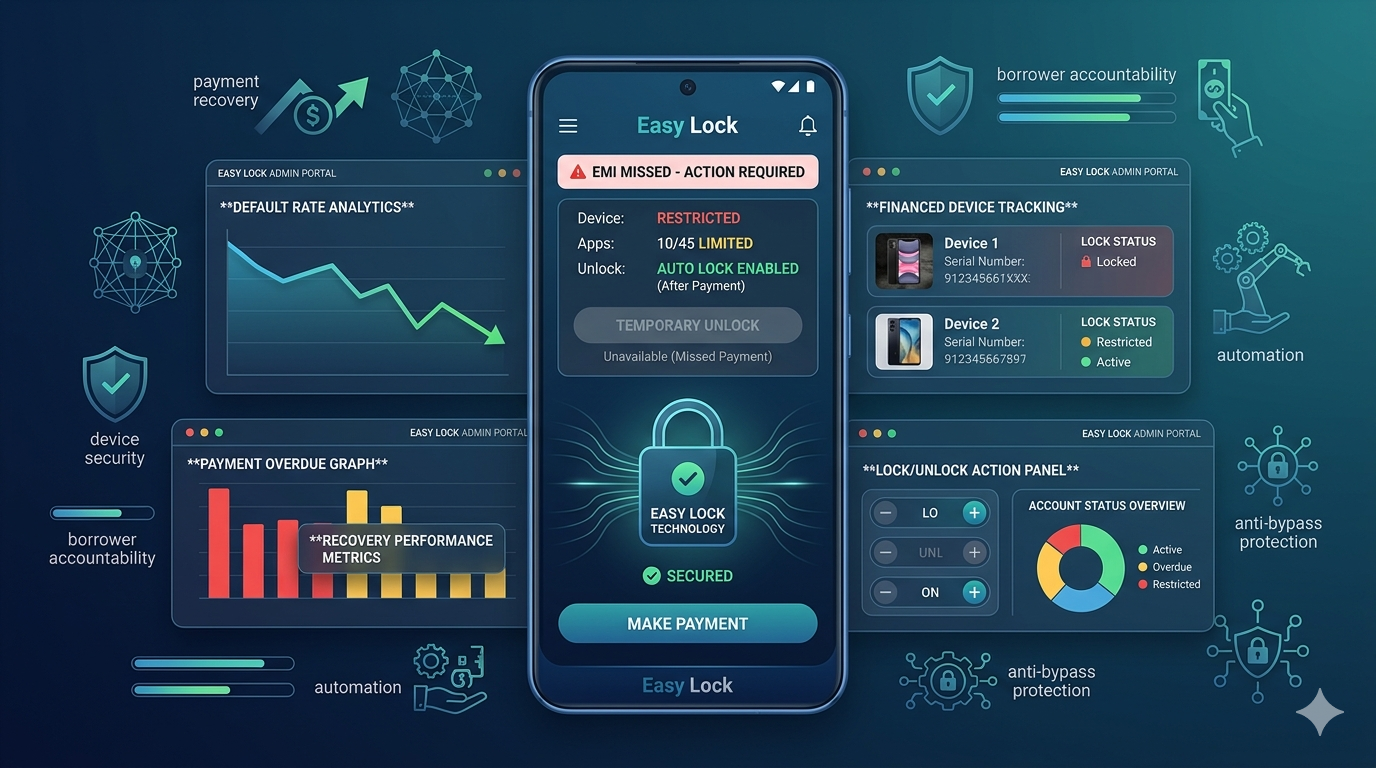
A finance lock app is a mobile device management application installed on financed Android smartphones at the time of sale. It gives the lender or retailer remote control over the device — specifically the ability to lock, restrict, or unlock the phone based on the borrower's EMI payment status.
The terms "finance lock app," "finance locker app," and "financial lock" all refer to the same category of software. In some regions it is also called a device finance lock or mobile finance lock software. The underlying purpose is always the same: protecting the lender's financial interest in a device that the borrower is still paying for.
Why Finance Lock Apps Exist
In traditional lending — car loans, home loans — lenders have legal and physical mechanisms to repossess collateral if payments stop. With mobile phones, repossession is practically impossible. The device is small, portable, and the borrower controls it completely after the sale.
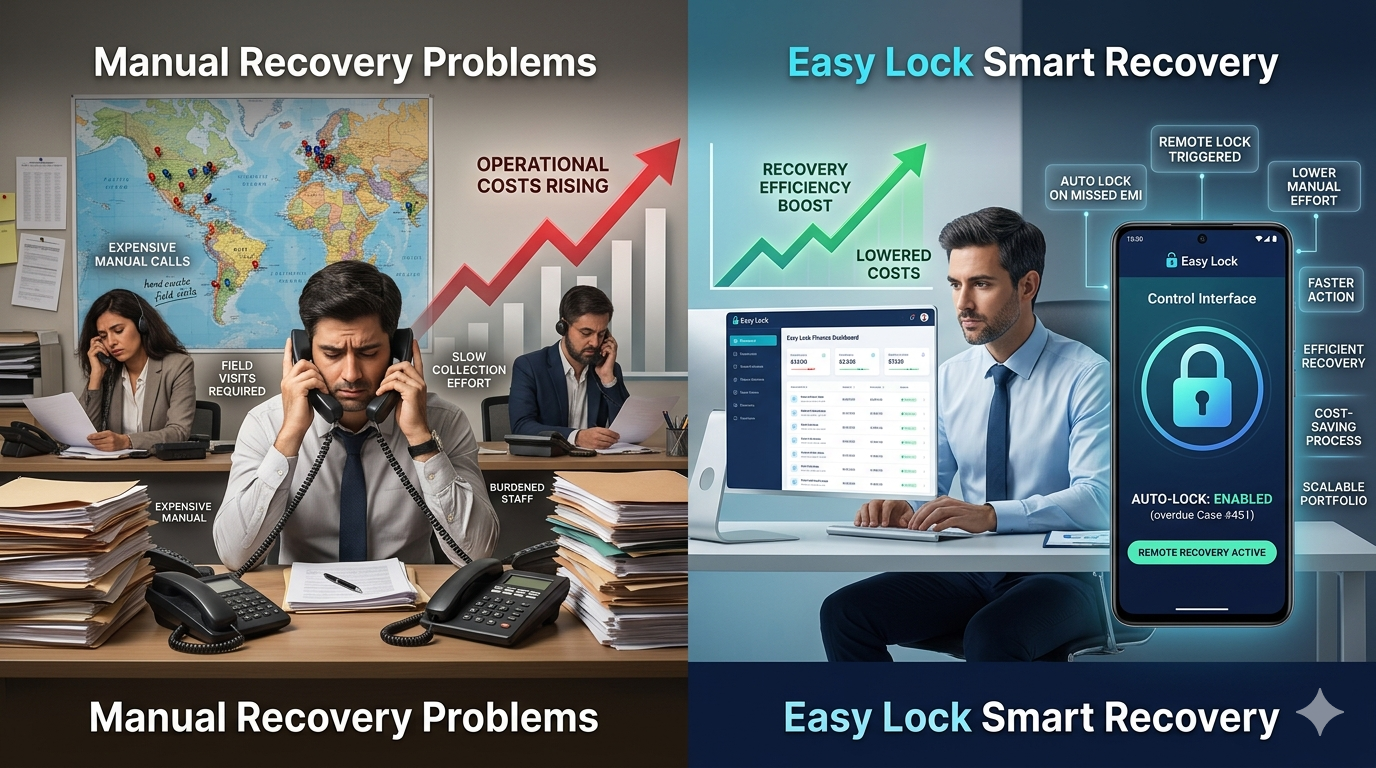
Finance lock apps solve this problem. By installing device management software before the phone leaves the store, lenders create a technological lever that works even after the sale. This is especially important in India where mobile EMI financing has grown rapidly across tier-2 and tier-3 cities, and collection infrastructure is limited.
How a Finance Lock App Works — Step by Step
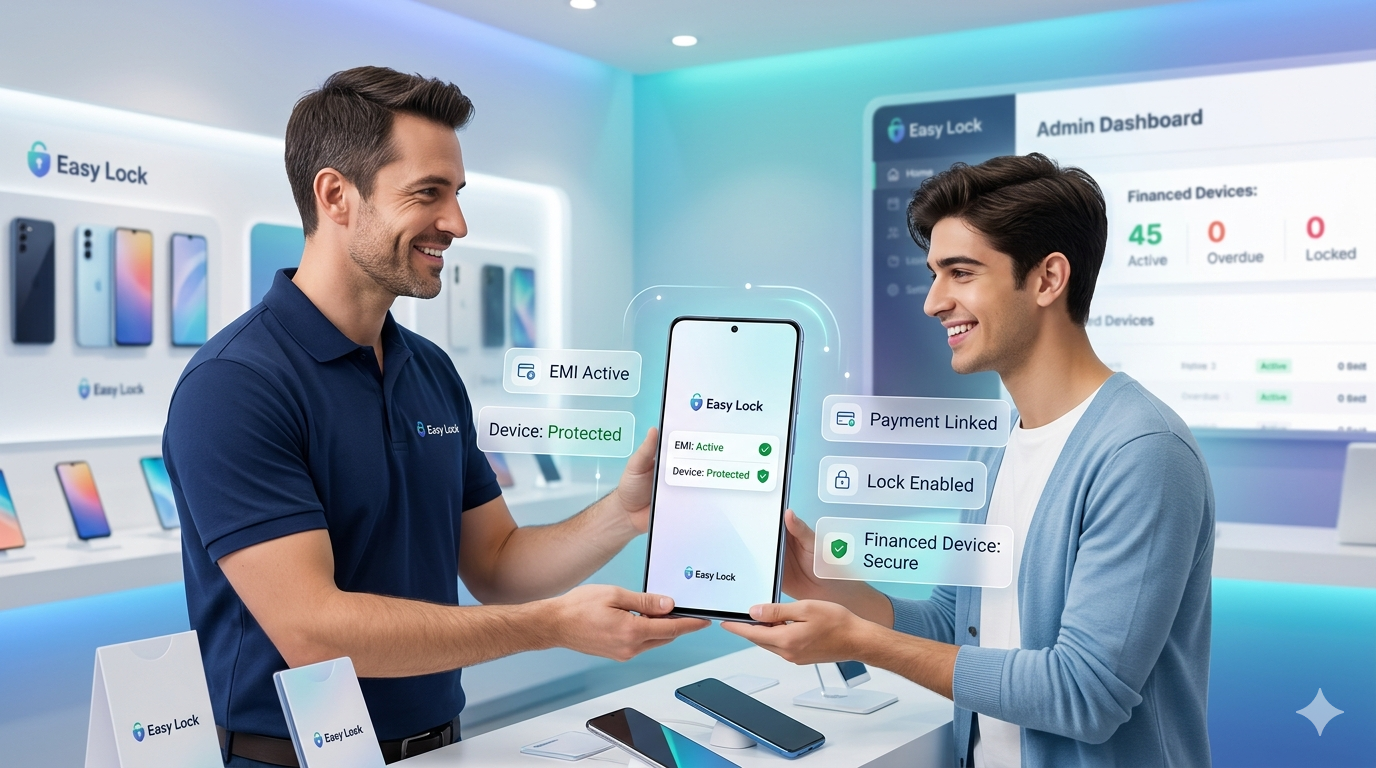
Enrollment at point of sale: When the customer buys the phone on EMI, the retailer or lender installs the finance lock app and enrolls the device in their management dashboard. Modern platforms like EasyLock use a single QR scan — no complex setup required.
Background monitoring: The app runs silently in the background during normal use. The customer uses the phone like any other device. There is no impact on performance or daily functions while payments are current.
Payment reminders: Before each EMI due date, the system sends automated reminders via push notification or SMS. This reduces missed payments by ensuring the borrower stays aware of upcoming obligations.
Automatic lock on missed payment: If an EMI is not paid by the due date, the finance lock app can automatically restrict the device. The level of restriction depends on the lender's configuration — from limiting certain apps to full device lock.
Remote unlock on payment: Once the borrower clears the outstanding amount, the lender unlocks the device instantly from their dashboard. The borrower regains full access within minutes.
Key Features of a Good Finance Lock App
Remote lock and unlock: The core feature. Must work reliably over mobile data and Wi-Fi connections.
Offline unlock code: Allows device unlock without internet — critical for rural India where connectivity is inconsistent.
Auto-lock on EMI failure: Automated enforcement removes the need for manual monitoring of every account.
FRP and anti-tamper protection: Prevents borrowers from bypassing the lock by factory resetting the phone.
App restriction: Selectively disable specific apps rather than full lock, for graduated enforcement.
Location tracking: Helps locate devices for physical recovery if remote resolution fails.
Portfolio dashboard: A central view of all financed devices, payment statuses, and lock/unlock history.
Who Uses Finance Lock Apps in India?
NBFCs (Non-Banking Financial Companies) offering mobile loan products use finance lock apps to reduce default rates across large portfolios. Mobile retailers who offer in-store EMI use them to protect devices sold without formal credit checks. Fintech companies building buy-now-pay-later products for smartphones use finance lock as core risk management infrastructure. Distributors offering device financing programs to their retail network also benefit from centralized device control.
Is a Finance Lock App Legal?
Yes, when implemented with proper borrower consent. In India, finance lock apps operate within the framework of the financing agreement. Borrowers are informed at the time of purchase that the device will have a finance lock installed, and they provide consent as part of the loan documentation.
Responsible platforms like EasyLock build consent and transparency into the enrollment process, ensuring compliance with RBI guidelines for NBFCs and fair practice requirements.
Finance Lock App vs EMI Lock App — Is There a Difference?
These terms are used interchangeably in India. "EMI lock app" tends to be used more by borrowers and end consumers, while "finance lock app" or "finance locker app" is increasingly used in B2B and industry contexts. Both refer to the same technology. EasyLock serves both use cases — whether you call it an EMI lock or a finance lock, it's the same platform.
Conclusion
A finance lock app is the foundational technology for safe mobile device lending in India. It bridges the gap between the lender's need to protect their investment and the practical reality that smartphones cannot be physically repossessed. If you are a lender, retailer, or fintech company offering device financing, a finance lock app is not optional — it is essential infrastructure.
EasyLock is India's purpose-built finance lock platform. Contact us to see how we can protect your portfolio from day one.
Related reading: what is an EMI lock app covers the borrower-side perspective in detail. For a comparison of platforms, see top 5 finance lock apps for lenders and retailers. Curious about compliance? Read EMI lock apps and NBFC compliance.
Download EasyLock on Google Play
Join 50,000+ lenders and retailers protecting financed devices across India.