What Is an EMI Lock App and How Does It Work for Financed Android Phones?
If you are involved in mobile financing, you may have heard about EMI lock apps. This guide explains what EMI lock apps are and how they work for financed Android phones.
Simple Explanation of EMI Lock Apps
An EMI lock app is a mobile device management application designed specifically for financed smartphones. It allows lenders and retailers to remotely control Android devices that are sold on EMI or installment basis.
When a customer purchases a smartphone on EMI, the finance company or retailer installs the EMI lock app on the device. This app remains active throughout the financing period, giving the lender the ability to control the device if the customer misses payments.
Unlike traditional collection methods that rely on phone calls and field visits, an EMI lock app provides direct technological control over the device itself. This creates real consequences for non-payment that simple reminders cannot match.
The app works silently in the background. Customers may not even notice it is running until payments become overdue. When that happens, the lender can take action directly from their dashboard.
How Financed Android Phones Are Enrolled and Controlled
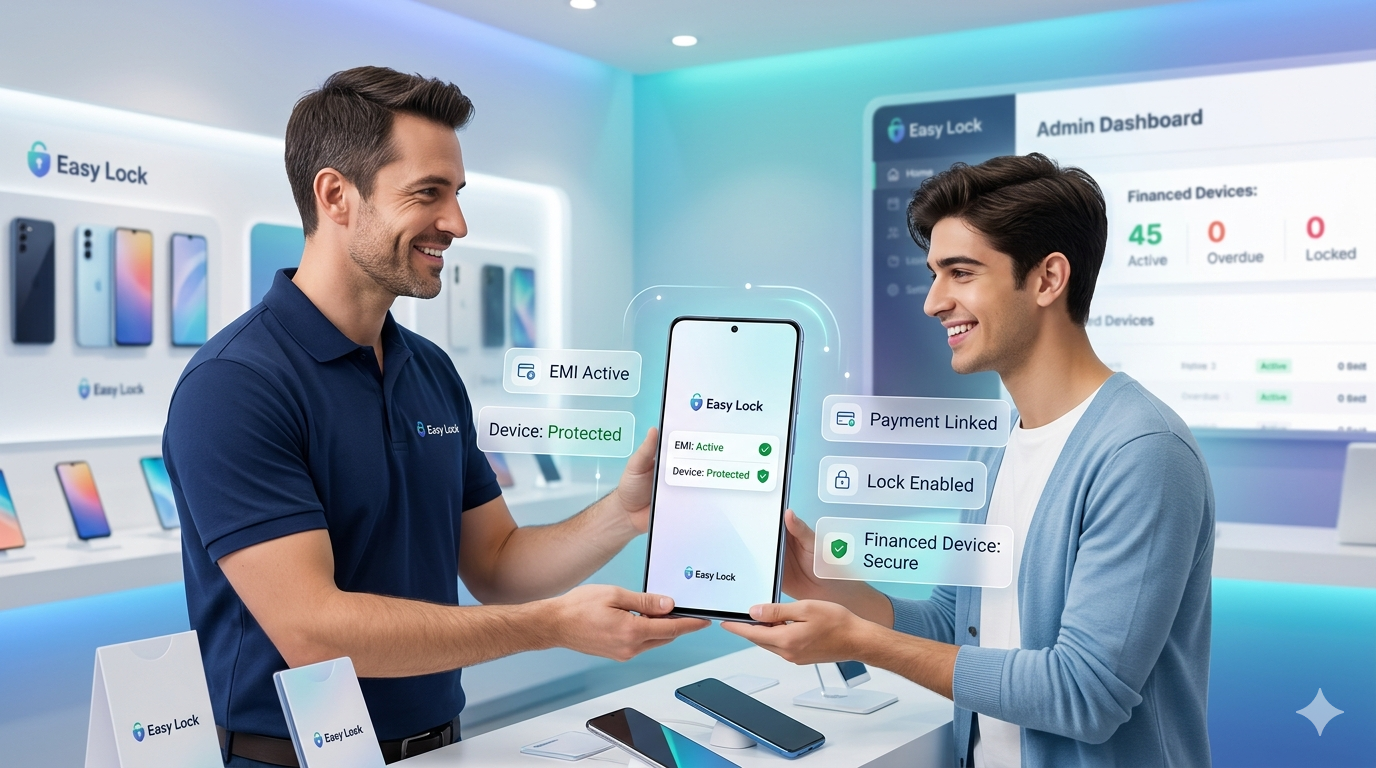
The enrollment process is simple. When a customer purchases a phone on EMI, the retailer or finance company downloads the EMI lock app onto the device. The app requests necessary permissions for device administration.
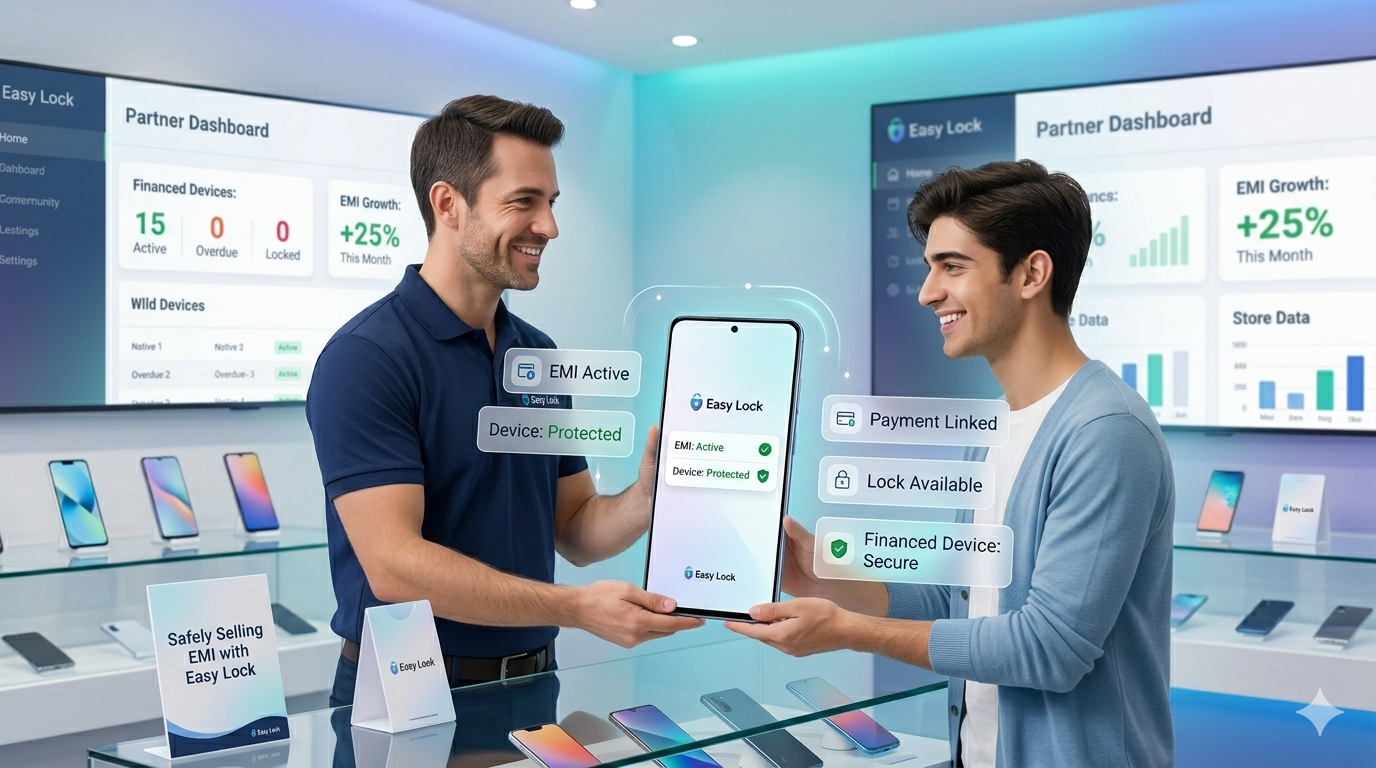
EasyLock makes enrollment easy with one QR enrollment - no complex Test DPC setup required. Devices are bound to the organization's dashboard within minutes during the sale.
Once installed, the app connects to the lender's management dashboard. This dashboard becomes the control center for the entire financed device portfolio. Each device appears in the dashboard with its status, payment history, and available controls.
The app uses Android's Device Administration API, which provides system-level controls. These controls are more powerful than simple app locks and cannot be easily bypassed by average users. EasyLock's anti-tamper protection includes FRP protection, hard reset protection, and flash protection.
Throughout the financing period, the app maintains connection to the dashboard. This enables real-time monitoring and immediate action when needed.
EasyLock Features for EMI Lock
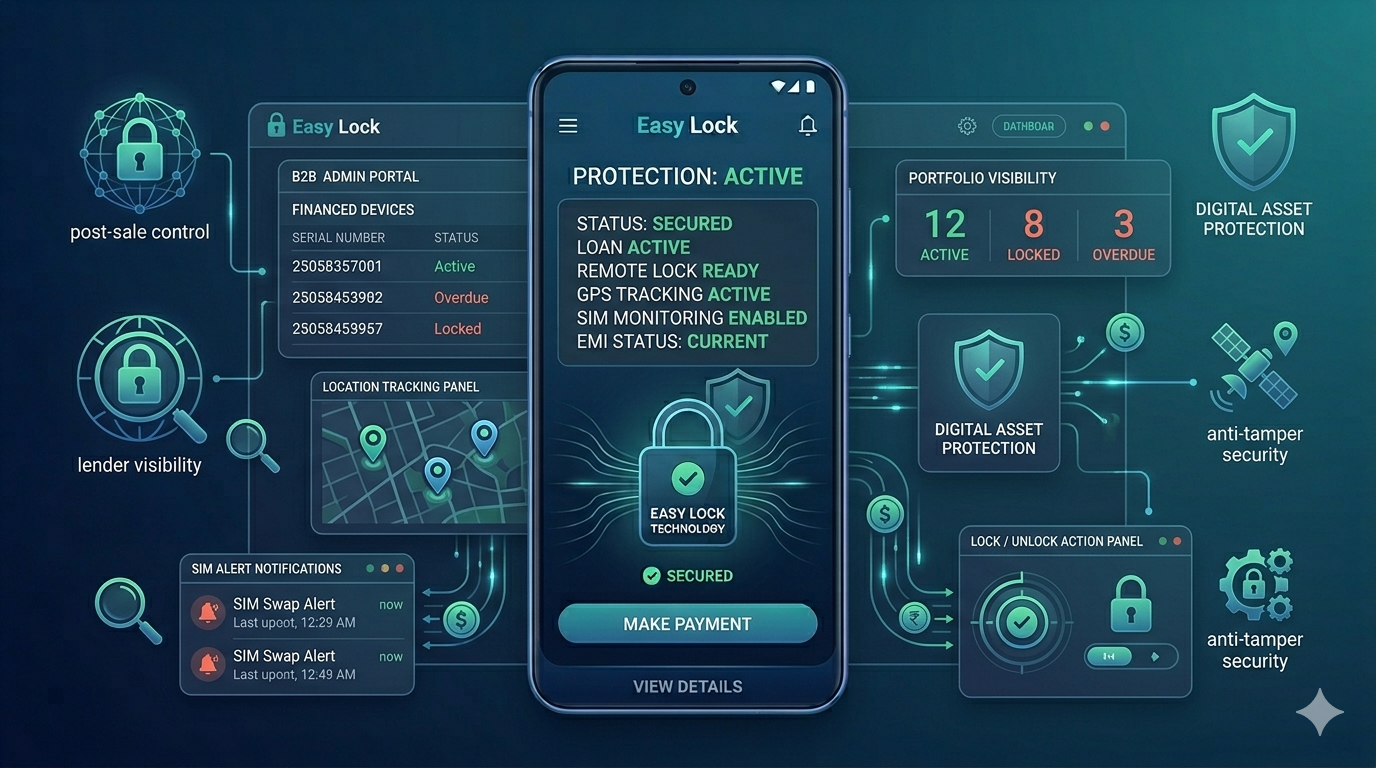
EasyLock provides comprehensive remote control: remote lock/unlock for instant control, offline unlock codes that work without internet, temporary unlock for customer convenience, and app restriction for selective locking.
Auto lock on EMI failure enables automated enforcement - when payments are missed, devices lock automatically without manual intervention.
Location tracking and SIM tracking help identify device locations for recovery when remote resolution fails. SIM tracking also detects unauthorized usage patterns.
The portfolio dashboard provides visibility into all devices with payment status, helping lenders make data-driven decisions.
What Happens When EMI Is Overdue
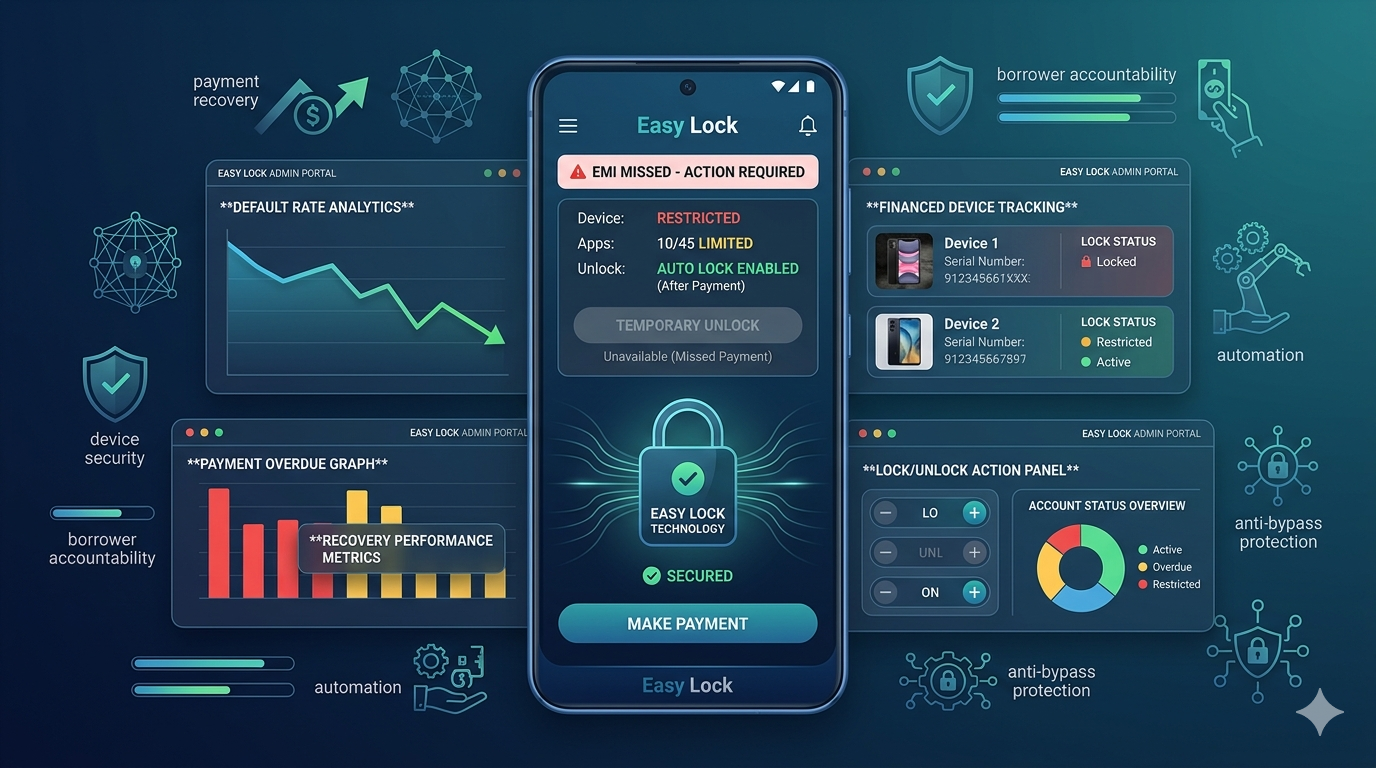
When a payment becomes overdue, the lender can initiate locking from their dashboard. The lock command travels to the device through internet connectivity and activates immediately.
Once locked, the device displays a notice explaining that payments are overdue and providing contact information for resolution. The customer cannot use the device normally until the matter is resolved.
The lock is not permanent. When the customer brings their account current, the lender unlocks the device from the dashboard. This unlock happens within minutes, restoring full device access.
This immediate lock-unlock capability creates powerful incentives. Customers know that paying on time keeps their device working. The consequences are real and immediate.
How Lenders Use Lock-Unlock Workflows
Most lenders implement graduated workflows. First, automated payment reminders are sent as the due date approaches. If payment is missed, soft notifications appear on the device.
If the payment remains outstanding, selective restrictions may be applied. This might include disabling payment apps or entertainment apps while allowing communication. The customer can still make calls but cannot use other features.
For continued non-payment, full device lock is applied. The device becomes unusable until the customer contacts the lender, makes payment arrangements, or returns the device.
Professional EMI lock apps include audit trails showing all actions taken. This documentation protects both parties and supports compliance requirements.
Why This Is Useful in Mobile Financing Business
The mobile financing business faces unique challenges. Unlike car loans or home loans, the collateral is a portable device that customers carry with them. Traditional enforcement methods simply do not work.
EMI lock apps solve this problem directly. They provide the leverage that makes payment enforcement possible. Customers who know their device can be locked have strong incentive to prioritize payments.
The technology also reduces recovery costs dramatically. What required dozens of calls and field visits now needs a single dashboard action. Staff can focus on more productive activities.
Perhaps most importantly, EMI lock apps make the business scalable. Lenders can grow their portfolios without proportionally increasing collection staff. The technology handles enforcement consistently across any portfolio size.
Conclusion
An EMI lock app is essential infrastructure for mobile financing business. It provides the technological solution to what was previously an unsolvable problem. Understanding how these apps work helps lenders make informed decisions about protecting their portfolios.
If you are a borrower wondering what happens if you don't pay phone EMI, or looking to understand how to unlock an EMI locked phone, we have detailed guides for those too. You may also want to read about what a finance lock app is and how it differs from a general EMI lock.
EasyLock provides comprehensive EMI lock solutions. Our app is designed specifically for financed Android phones. Contact us to learn how we can help protect your mobile financing business.
Download EasyLock on Google Play
Join 50,000+ lenders and retailers protecting financed devices across India.