Why Android Device Lock Is Important in Mobile Financing Business
Mobile financing in India is predominantly an Android business. With over 95% market share, Android smartphones dominate device financing. This market reality makes Android device lock essential for financing business success.
How Mobile Financing Works in Real-World Retail and Lending
Mobile financing flows through retail stores and lending partners. Customers choose smartphones at shops, pay a small down payment, and pay the remaining amount in EMIs over 6-24 months.
The process is high-volume and low-margin. Thousands of transactions happen monthly across the country. Each transaction creates a receivable that must be collected over the loan term.
Distribution happens through both NBFC partnerships and in-house financing. Retailers may partner with multiple lenders. Customers may build relationships with preferred financiers.
The financing is small-ticket. Device prices typically range from ₹5,000 to ₹50,000. This creates unique collection challenges due to the high volume and relatively small individual amounts.
Common Recovery Issues in Mobile Financing
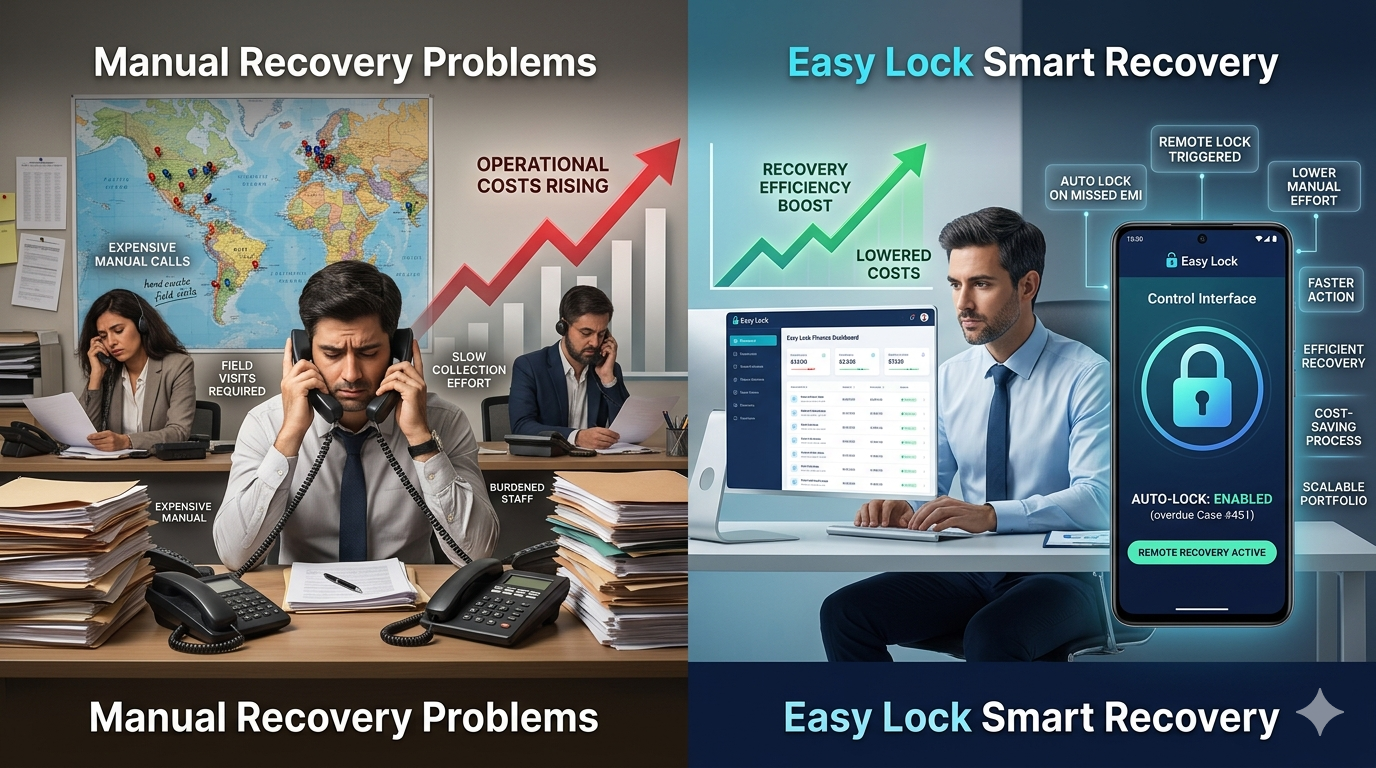
Recovery in mobile financing is notoriously difficult. Customers can simply stop paying and keep using their device. Collection calls are ignored. Field visits find empty addresses.
The disconnect between device ownership and payment creates the problem. Customers have the device. The lender has only a promise to pay. Without leverage, enforcement is nearly impossible.
Scale makes manual recovery impractical. A portfolio of 50,000 devices requires 50,000 individual collection efforts. No lender has that capacity. Automation is essential but not available in traditional approaches.
Cost per recovered rupee is often higher than the remaining value. Call centers, field teams, and legal fees add up quickly. Recovery becomes economically unviable for small balances.
Why Android Lock Technology Adds Protection
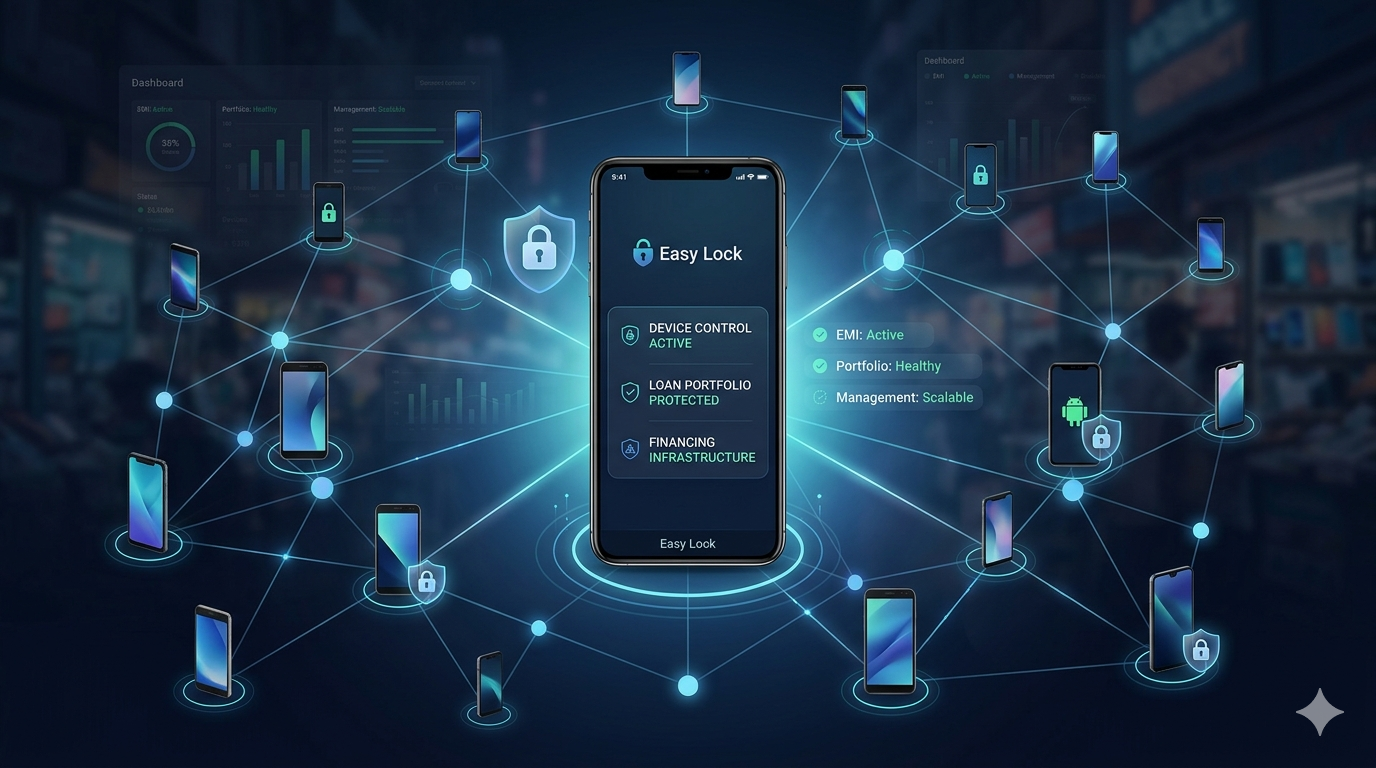
Android device lock provides the missing leverage. When customers know their device can be locked remotely, they prioritize payment. The smartphone becomes actual collateral. EasyLock leverages Android's Device Administration API to provide system-level controls that are robust and difficult to bypass.
Lock technology works through Android device management APIs. These system-level controls are robust and difficult to bypass. Unlike app locks, device locks remain active until explicitly removed. EasyLock's FRP protection and hard reset protection ensure devices remain secured even after factory reset attempts.
The technology is always available. No need for customer cooperation. No field visits required. Lock happens from a dashboard and reaches the device immediately through mobile data or WiFi connectivity.
Graduated locking preserves relationships. Start with warnings. Progress to selective restrictions. Full lock is reserved for serious delinquency. This approach balances protection with customer experience. EasyLock's app restriction feature allows locking specific apps while allowing calls and messages.
EasyLock: Purpose-Built for Android Device Financing
EasyLock is designed specifically for the Android-dominated Indian mobile financing market. Our platform addresses the unique challenges of financing smartphones on EMI through enterprise-grade device management.
No Test DPC required - EasyLock simplifies deployment by eliminating the complex Device Policy Controller setup that other enterprise MDM solutions require. Retailers can enroll devices in minutes without technical expertise.
One QR enrollment enables instant device binding. The partner generates a QR code, the customer's device is scanned, and the device is immediately connected to the organization's dashboard. This streamlined process handles high-volume retail environments efficiently.
Anti-tamper protection includes FRP (Factory Reset Protection), hard reset protection, and flash protection. These layers prevent customers from bypassing restrictions through device reset or firmware manipulation. The device remains controlled throughout the financing period.
Auto lock on EMI failure automates enforcement. When payment systems detect missed EMIs, the device locks automatically without manual intervention. This ensures consistent enforcement across all accounts.
How Lenders Can Use Android Lock for Better Control
Lock integration with payment systems enables automation. When payments are missed, locks trigger automatically. No manual intervention required. Enforcement happens consistently.
Dashboard visibility provides portfolio insights. Lenders can see which devices are locked, which are at risk, and which are performing. Data drives better decisions.
Unlock on payment restores customer access immediately. Quick resolution maintains relationships. Customers return for future financing. The business benefits from satisfied borrowers.
Recovery becomes scalable. One lock action covers one device regardless of location. No proportional staff increases needed. Geographic reach expands without cost multiplication.
Conclusion
Android device lock is essential infrastructure for mobile financing business. The market reality - 95% Android penetration - makes this technically necessary. The business reality - difficult recovery - makes this economically vital.
EasyLock provides Android device lock for mobile financing. Our platform is designed specifically for this market. Contact us to protect your financed device portfolio.
Download EasyLock on Google Play
Join 50,000+ lenders and retailers protecting financed devices across India.