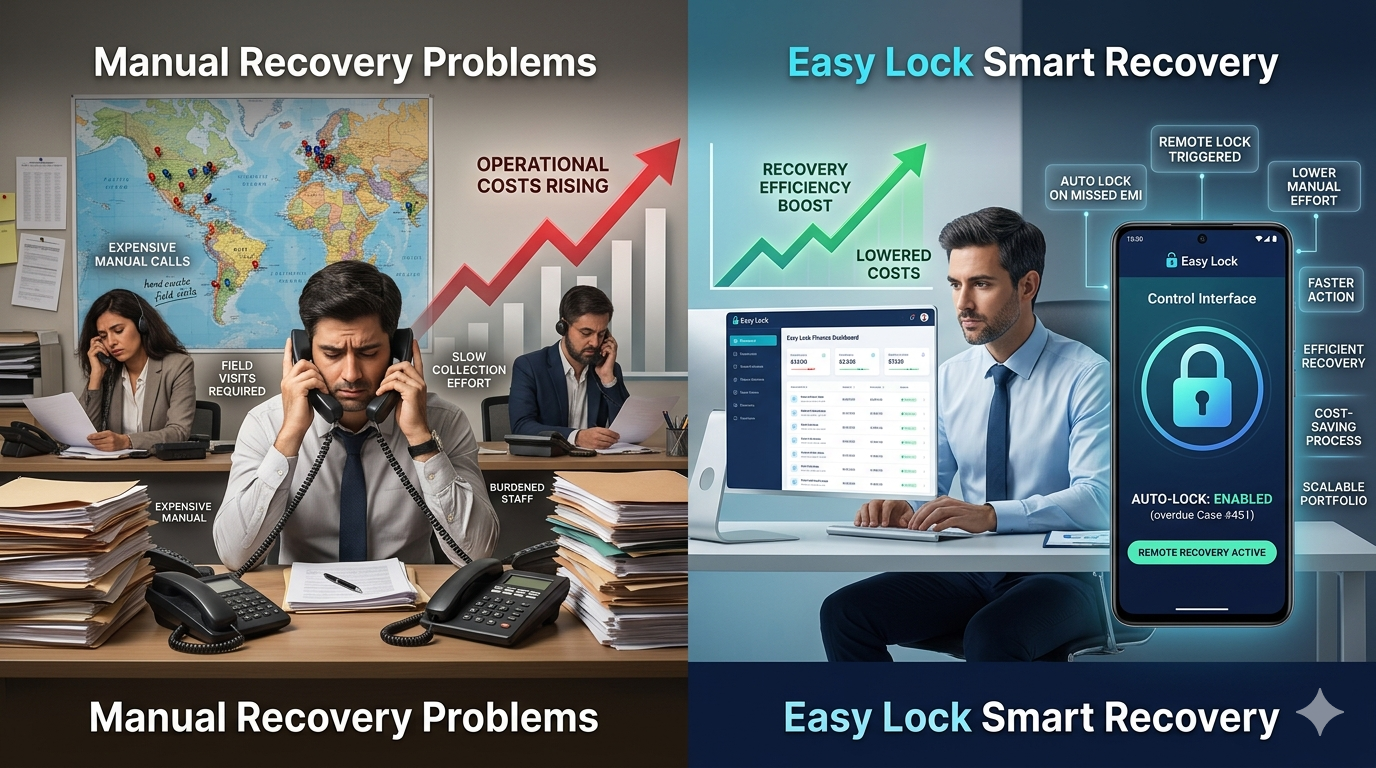
What Lenders Should Look for in an EMI Lock App
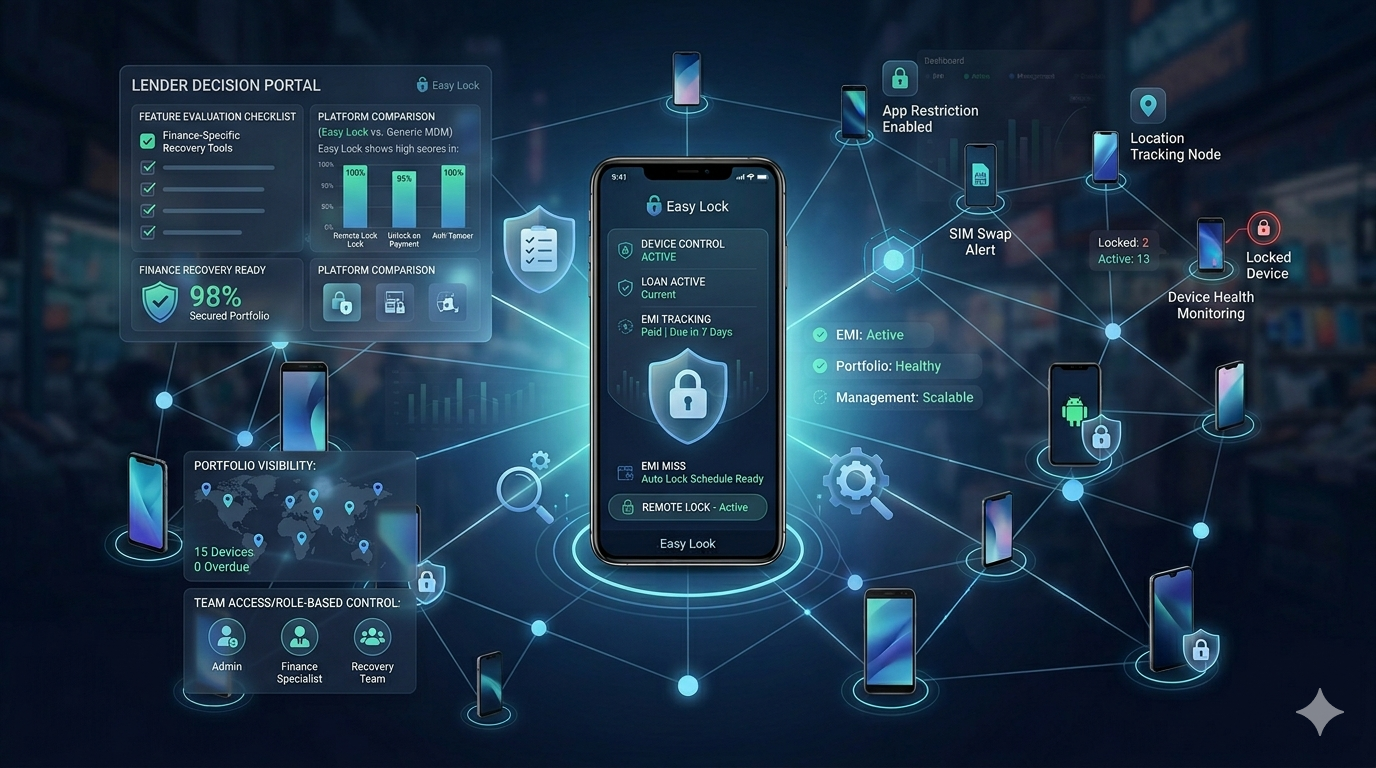
Not all EMI lock apps are built for finance recovery. Lenders should expect specific features that support their recovery objectives. This guide covers key capabilities to evaluate.
Key Features Lenders Should Expect
Remote lock capability is fundamental. The app must be able to lock devices remotely when payments are missed. Without this, the app provides no leverage for recovery.
Graduated locking ensures relationship preservation. Start with warnings. Progress to selective restrictions. Reserve full locks for serious delinquency. This approach balances protection with customer experience.
Instant unlock on payment is essential. When customers pay, they need immediate access restoration. Delayed unlocks damage relationships and create negative word-of-mouth.
Dashboard visibility provides portfolio insights. Which devices are locked? Which are at risk? Which are performing well? Data drives better lending decisions.
Remote Lock Capability Must-Haves
Remote lock must work across device types. Budget phones and flagship devices. Different manufacturers. Different Android versions. Compatibility matters.
Lock must survive device restarts. Some simple approaches fail when phones restart. System-level locks remain active throughout the loan term.
Bypass detection identifies tampering attempts. Some users try to remove locks. The app should detect and alert on jailbreak or root attempts.
Network independence matters. Devices should receive lock commands over mobile data or WiFi. Connectivity options ensure enforcement reaches devices.
Device Management and Control
Location tracking supports recovery operations. GPS data helps locate devices for physical return when remote resolution fails.
Device health monitoring provides insights. Battery levels, connectivity status, and app health indicate whether devices remain in active use.
App control enables selective restrictions. Lock specific apps while allowing others. This graduated approach preserves some functionality during delinquency.
Usage analytics reveal behavioral patterns. Device usage data can indicate payment probability and help prioritize recovery efforts.
Ease of Deployment and Scalability
Deployment should be simple. The app installs during device sale. Minimal staff training. No technical expertise required from users.
Integration with finance systems enables automation. Lock triggers connect to payment tracking. Manual intervention becomes unnecessary.
Scalability handles portfolio growth. Adding devices shouldn't require proportional cost increases. Marginal costs stay near zero as portfolios expand.
Multi-user access enables team collaboration. Collection teams, operations, and management all have appropriate access. Role-based security protects sensitive data.
Why Not All Lock Apps Are Built for Finance Recovery
Consumer apps lack business features. Individual phone finders don't support portfolio management. Lender requirements differ from consumer needs.
Generic MDM doesn't understand finance. Enterprise device management doesn't include payment integration or recovery workflows.
Compliance readiness varies. Finance lending requires regulatory compliance. Not all solutions meet NBFC requirements.
Support matters. When problems arise, responsive support prevents portfolio losses. Consumer-grade apps lack enterprise support.
Conclusion
Lenders should expect specific capabilities from EMI lock apps. Generic solutions won't meet finance recovery needs. Purpose-built features are essential for portfolio protection.
EasyLock is built for finance recovery. Our platform includes all the features lenders need. Contact us to evaluate our solution.
To see how platforms compare on these features, read the top 5 EMI lock apps in India 2026. For NBFCs evaluating options, see top 3 EMI lock apps for NBFCs. To understand how these features help recovery, read EMI lock vs traditional recovery methods.
Download EasyLock on Google Play
Join 50,000+ lenders and retailers protecting financed devices across India.