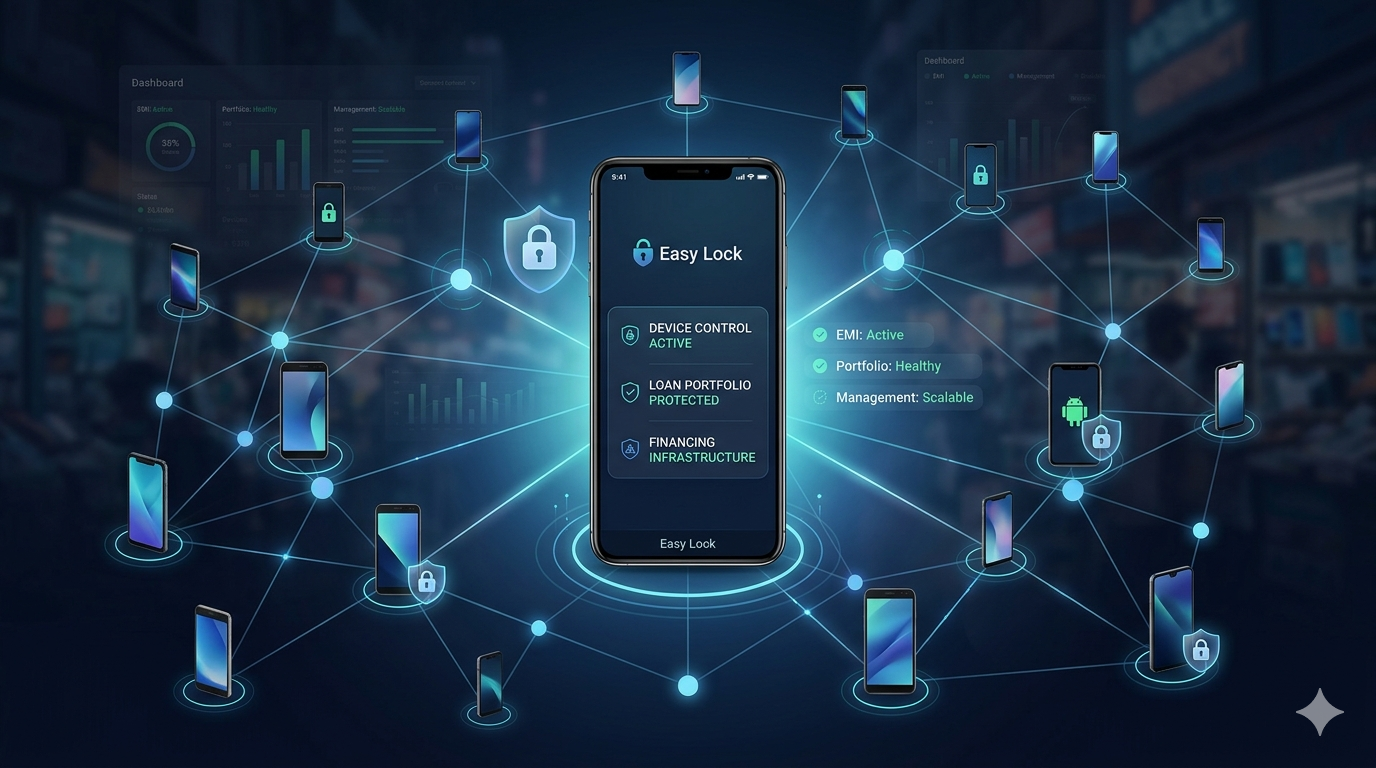
Mobile Financing Risk Management in India — Complete Guide 2026
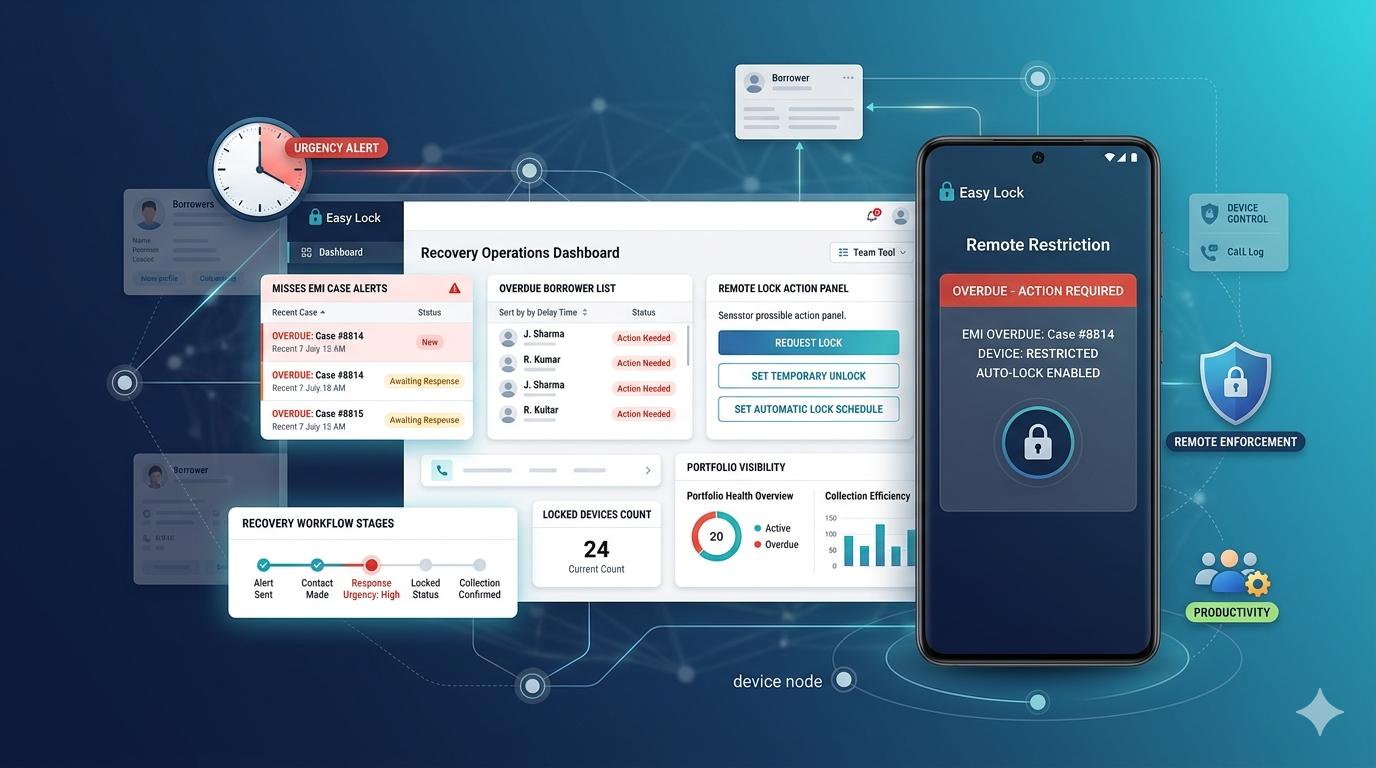
India's mobile financing market is growing fast — and so is the risk. With over 100 million smartphones sold on credit or installment in 2025, the total outstanding mobile loan book in India runs into hundreds of thousands of crores. Managing risk in this environment requires more than credit scoring — it requires the ability to enforce repayment at the device level. This is the complete guide to mobile financing risk management in India in 2026.
The Key Risks in Mobile Financing
1. Willful Default Risk
The most common and damaging risk. Once a customer has possession of the phone, the financial incentive to repay weakens — especially after the 3rd or 4th EMI when the initial satisfaction of the purchase has faded. Without a device-level enforcement mechanism, willful defaults are structurally inevitable.
2. Device Resale Risk
Customers who intend to default often sell the financed device before stopping payments. The phone is gone before the lender takes any action. Device lock software with SIM swap detection and location tracking provides early warning before a device is resold — and makes the device unsellable to a buyer who sees a locked screen.
3. Identity Fraud Risk
False identity documents used to obtain mobile loans are a growing problem in India, particularly in tier 2 and tier 3 cities. Device lock software does not eliminate this risk at the enrollment stage, but it ensures that even a fraudulent enrollment does not become an unrecoverable loss — the device can still be locked and rendered useless to the fraudster.
4. Regulatory Risk
RBI's 2027 device lock guidelines introduce compliance obligations for lenders using device lock software. Lenders who are not compliant face regulatory exposure. EasyLock is built to the RBI 2027 specification — consent capture, grace periods, staged restrictions, audit trails.
5. Operational Recovery Risk
Without automation, recovery operations create their own risk — high cost, inconsistent execution, relationship damage, and legal exposure from improper collection practices. Automated device lock software removes the human element from the enforcement cycle, reducing operational risk significantly.
How Device Lock Software Addresses Each Risk
- Willful default: The device stops working on missed payment — direct, unavoidable consequence
- Device resale: Lock renders the device unusable; location tracking provides pre-default warning
- Identity fraud: Locked device cannot be profitably used or resold, reducing fraud ROI
- Regulatory risk: EasyLock's built-in compliance features satisfy RBI 2027 requirements
- Operational risk: Automated lock/unlock removes manual enforcement steps and associated risk
Risk Management Framework for Mobile Lenders
The most effective mobile financing risk management framework in India combines four layers:
- Enrollment screening — basic verification at point of sale
- Device lock software — installed at enrollment on every financed device
- Automated reminders — pre-default communication to reduce avoidable defaults
- Early intervention protocols — defined process for first missed payment response
EasyLock provides layers 2, 3, and 4 in a single platform — the device lock, the reminder automation, and the dashboard for early intervention.
To discuss risk management for your mobile financing operation, contact EasyLock at easylock.in/contact-us or call +91 8637-0273-56. Also read: how to reduce EMI defaults in mobile financing and EMI default rates in India.
EasyLock — Mobile Financing Risk Management
The complete risk management platform for India's mobile lending market.