RBI EMI Lock Rules 2027 — What Every Lender & NBFC Must Know
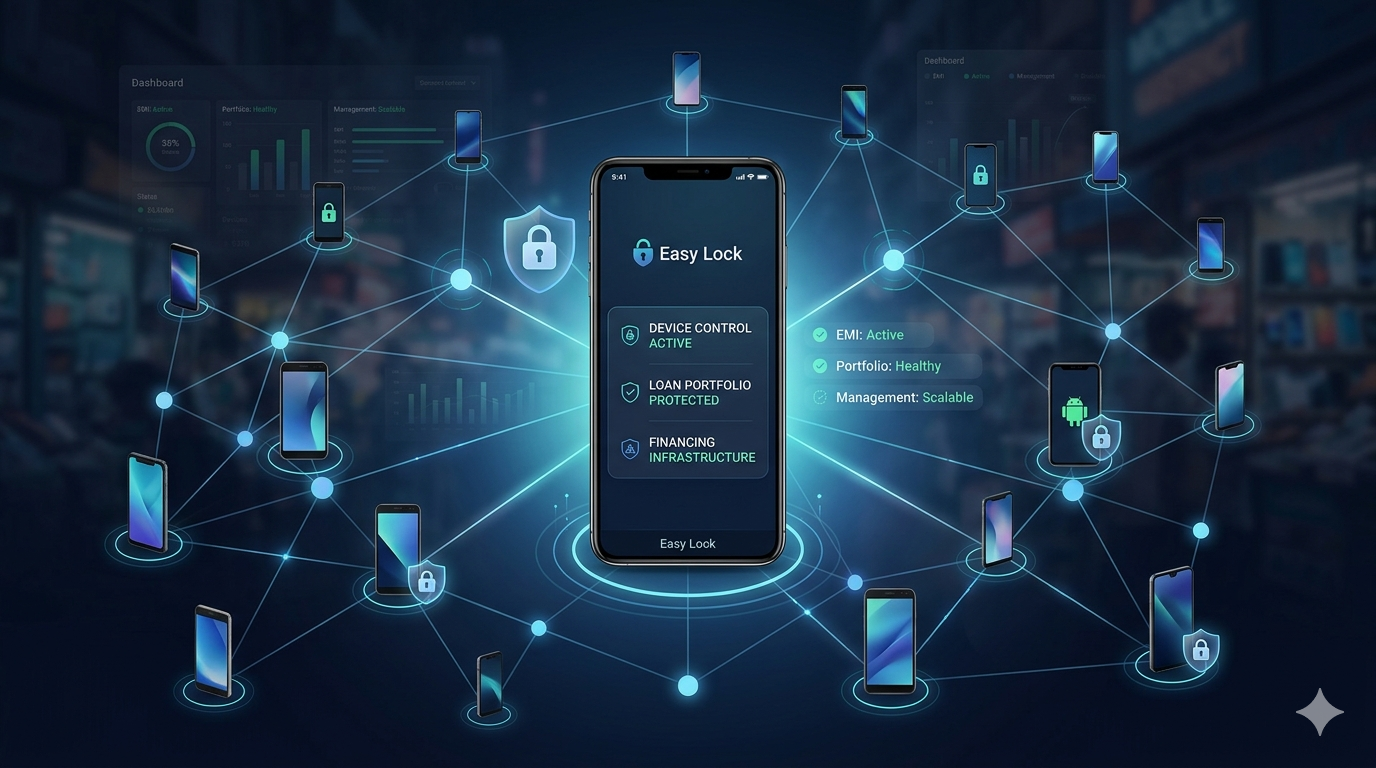
The Reserve Bank of India's new framework for EMI device lock rules takes effect January 1, 2027. Every NBFC, fintech lender, and mobile retailer using a phone lock for EMI default must comply with these new regulations — or risk regulatory penalties. This guide explains every requirement clearly and shows how EasyLock is already fully aligned.
What Are the RBI EMI Lock Rules for 2027?
The RBI's new device-backed lending framework governs how lenders can use technology — specifically EMI device lock software — to restrict financed phones when borrowers default. The framework formalises what was previously an informal practice, providing both lenders and borrowers with clear rules.
Key requirements under the RBI EMI lock rules 2027:
- Explicit written consent: The borrower must give clear written consent at the time of loan disbursement, acknowledging that the device may be restricted if payments are missed.
- 30-day grace period: No restrictions can be applied until the loan account has been overdue for at least 30 days. Immediate locking on a missed EMI is not permitted.
- Staged restrictions: Initial restrictions (partial lock — e.g., app restrictions) can be applied after 30 days. A complete device lock requires the account to be overdue for 60 days.
- 7-day advance notice: Before applying a full lock, the lender must send the borrower a 7-day written notice.
- Emergency functions preserved: Even during a full lock, the device must allow emergency calls (100, 108, 112) and access to emergency services.
- Immediate unlock on payment: Once the borrower makes payment, the device must be unlocked within a defined period — not delayed.
- Audit trail required: Lenders must maintain records of consent, all lock/unlock actions, and notices sent — available for RBI inspection.
What Phone Lock for EMI Default Was Like Before 2027
Before the RBI formalised the phone lock EMI default framework, lenders could lock phones at their discretion — sometimes immediately after a missed payment. The RBI stepped in after complaints that borrowers were being locked out of essential device functions without adequate notice or recourse.
The 2027 rules establish a borrower-protection framework while still allowing lenders to use RBI device lock technology legitimately. Lenders who operated responsibly will find the new rules confirm their existing practices. Those who were locking phones immediately on missed payments must adjust their processes.
How the RBI EMI Lock Rules Affect NBFCs
For NBFCs, the RBI EMI lock rules 2027 mean three things practically:
1. Consent documentation must be watertight. The consent captured at enrollment must specifically describe device restriction, the conditions that trigger it, and the borrower's rights. Generic loan agreements are not sufficient.
2. Grace period configuration must match RBI timelines. Your EMI lock software must be configurable to apply initial restrictions only after 30 days and full lock only after 60 days. Platforms without this configurability are non-compliant.
3. Emergency call preservation must be built in. Your device lock software must technically preserve emergency calling even during a full lock. This is a software architecture requirement, not just a policy one.
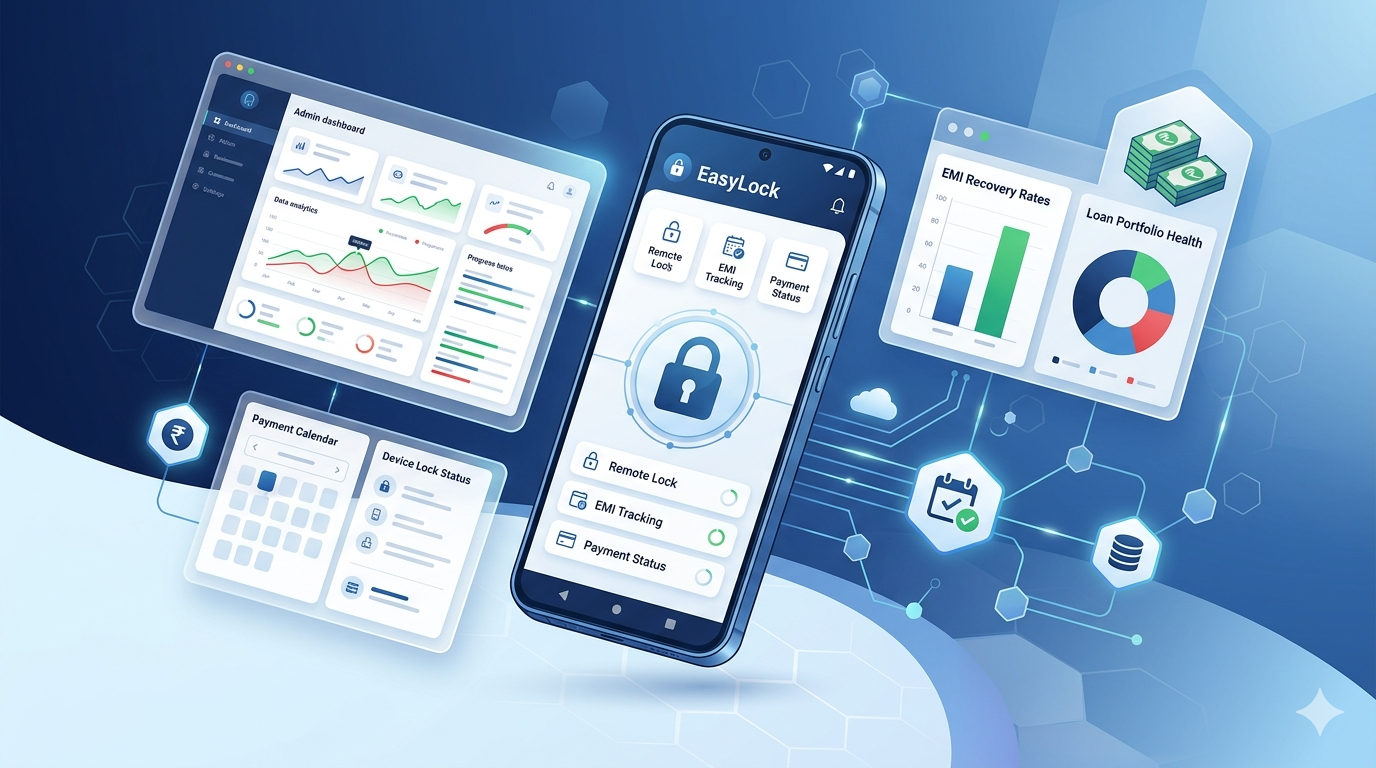
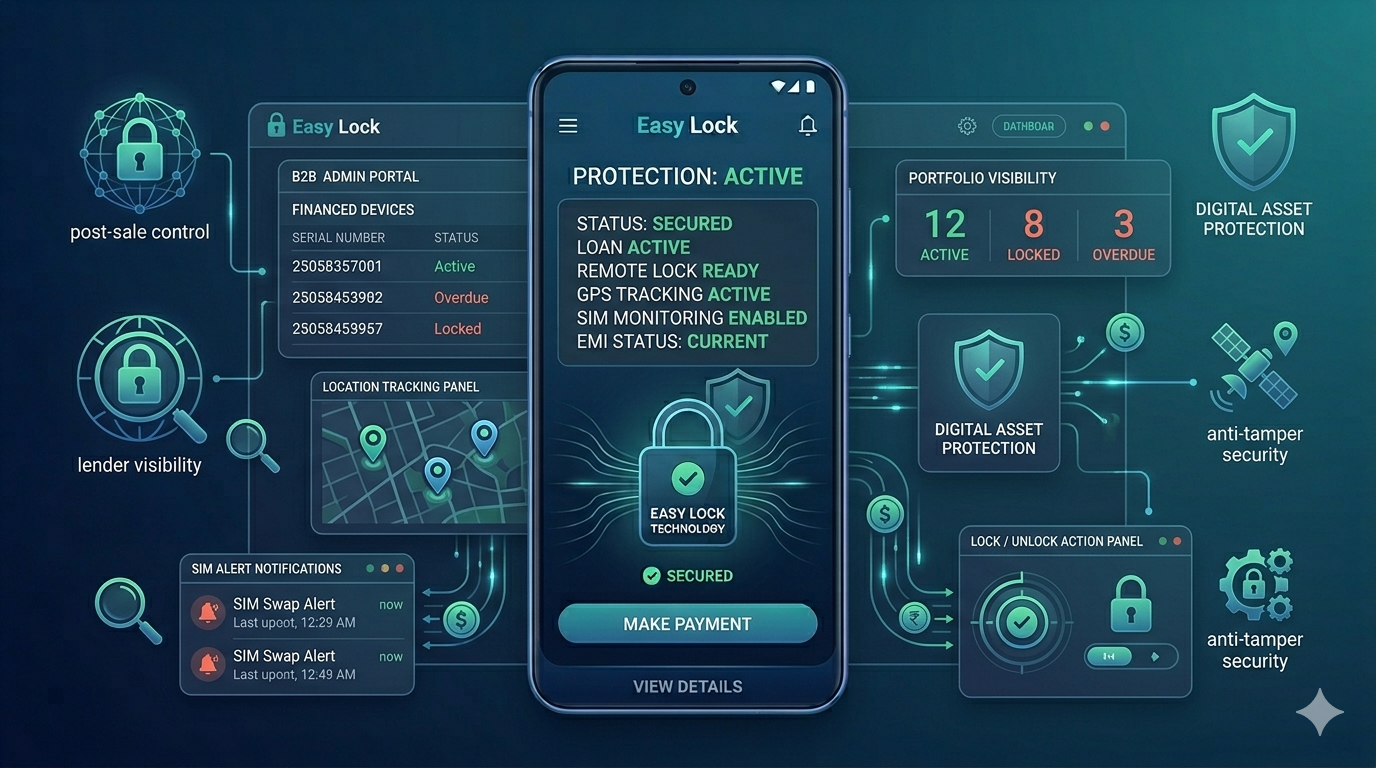
How EasyLock Complies with RBI EMI Lock Rules 2027
EasyLock was designed from the ground up with the Indian regulatory environment in mind. Here is how each RBI requirement maps to EasyLock's platform:
| RBI Requirement | EasyLock Feature |
|---|---|
| Written consent at enrollment | Consent capture built into QR enrollment flow |
| 30-day grace before partial lock | Configurable grace period per account or portfolio |
| 60-day threshold for full lock | Staged restriction modes — partial and full lock |
| 7-day advance notice | Automated SMS/notification sequence before lock |
| Emergency calls preserved during lock | Emergency dialler always accessible on lock screen |
| Immediate unlock on payment | Sub-second unlock on dashboard command or API trigger |
| Audit trail for RBI inspection | Full event log — consent, lock, unlock, notices — exportable |
What Lenders Should Do Before January 2027
If you are currently using an EMI lock app that does not support configurable grace periods, staged restrictions, or documented consent capture — you need to migrate before January 1, 2027.
Checklist for RBI EMI lock compliance:
- ✓ Consent form explicitly describes device lock conditions
- ✓ EMI lock software supports 30-day and 60-day thresholds
- ✓ Staged partial lock and full lock modes available
- ✓ 7-day advance notice automated in the system
- ✓ Emergency calls confirmed accessible during lock
- ✓ Unlock within defined period after payment — automated
- ✓ Full event audit trail exportable for regulatory review
EasyLock supports all of the above. To see the platform in action and confirm compliance for your portfolio, contact us at easylock.in/contact-us or call +91 8637-0273-56.
EasyLock — RBI-Compliant EMI Lock App
Built for NBFCs and lenders. Fully aligned with RBI EMI lock rules effective January 2027.