Top 3 EMI Lock Apps for NBFCs in India 2026
NBFCs operating in mobile device financing face a unique challenge: high volume, low-margin loans where the collateral walks out the door with the borrower. The right EMI lock app transforms this risk profile. This guide cuts through the options and presents the top 3 EMI lock apps evaluated specifically for NBFC requirements in 2026.
What NBFCs Need From an EMI Lock App
NBFCs have specific compliance, scale, and operational requirements that differ from a small retailer offering in-house EMI. The app must support high-volume enrollment — potentially hundreds of devices per day across multiple branches. It must provide a portfolio dashboard that collection managers can use to monitor thousands of accounts simultaneously. It must integrate with existing loan management and payment systems through APIs. And it must generate audit trails that satisfy RBI regulatory requirements.
Customer communication is also critical for NBFCs. The lock screen message displayed to borrowers must be professional, include the NBFC's contact details, and reflect fair lending practices. Graduated enforcement — from reminders to partial restrictions to full lock — must be configurable to align with the NBFC's specific collection policy.
#1 EasyLock — Top Choice for NBFCs
EasyLock is the most capable EMI lock platform available to Indian NBFCs in 2026. It was purpose-built for the mobile lending market and handles every requirement that NBFCs face — from branch-level enrollment to enterprise-scale portfolio management.
For high-volume enrollment: EasyLock's one QR scan process without Test DPC means branch staff can enroll devices in under two minutes at the point of disbursement. Multiple branches can enroll simultaneously under the same organizational account. Devices appear in the central dashboard immediately after enrollment.
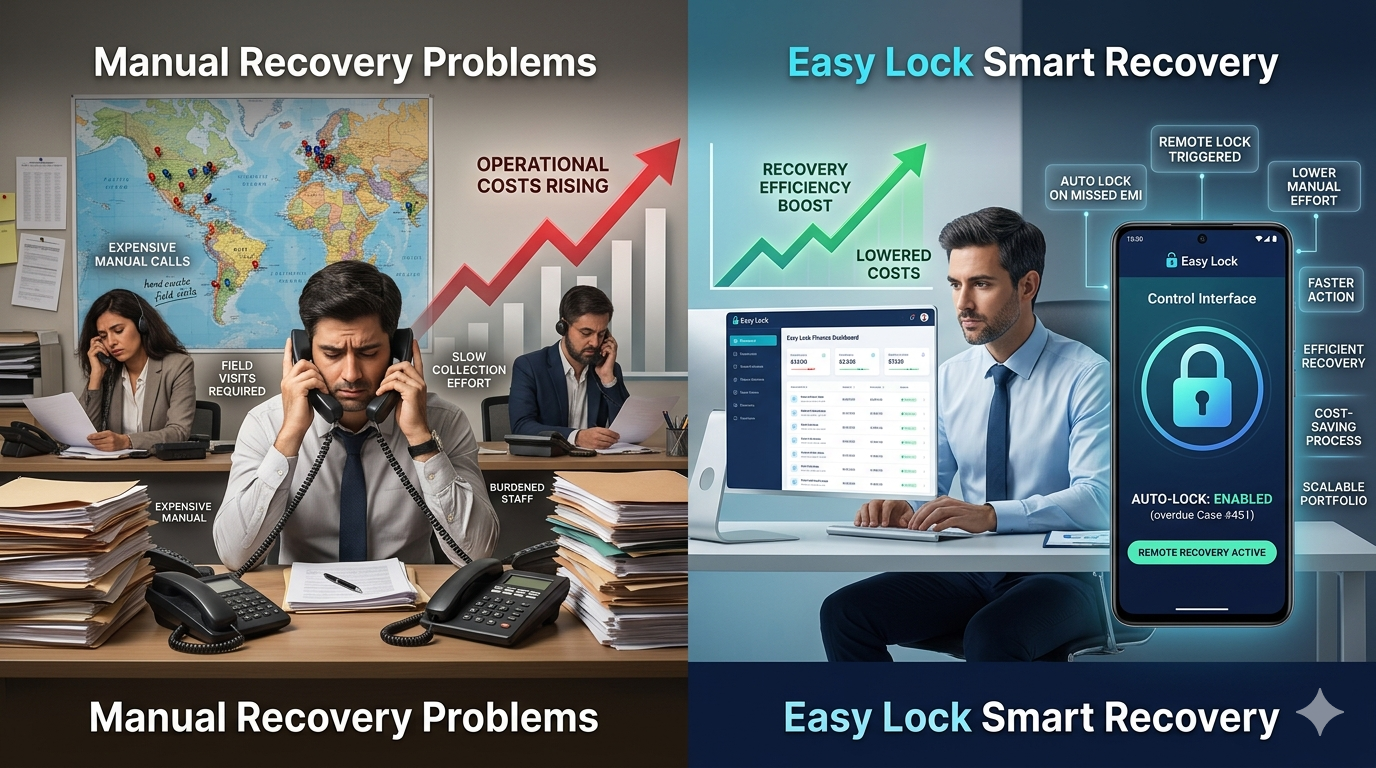
For portfolio management at scale: The dashboard provides real-time visibility into every enrolled device — payment status, lock state, location, and SIM information — across the entire portfolio regardless of size. Collection managers see overdue accounts at a glance. Bulk actions allow locking or communicating with multiple overdue accounts simultaneously.
For compliance: Every lock action, unlock action, and notification is timestamped and user-attributed in the audit trail. This documentation supports RBI examination requirements and protects the NBFC in the event of borrower disputes. Customer consent documentation is captured at enrollment.
For automation: API integration connects EasyLock's lock triggers to the NBFC's loan management system. When a payment record is marked overdue, the lock can fire automatically without any manual intervention. Payment confirmation triggers automatic unlock. The entire enforcement cycle is automated and documentable.
Anti-tamper protection covers FRP, hard reset, and flash attempts — essential for protecting the NBFC's collateral interest throughout the full loan term.
#2 Enterprise MDM with Custom Finance Integration
Some larger NBFCs have deployed enterprise MDM platforms — typically Microsoft Intune or a similar solution — with custom-developed finance integration layers built by their technology teams. This approach can work when the NBFC has the technical resources to build and maintain the integration.
The core MDM layer provides robust device management. The custom integration connects payment data to lock triggers. If well-executed, the result is a solution tailored exactly to the NBFC's specific workflows.
Drawbacks at scale: Custom integrations break when Android OS updates change MDM API behavior. Maintaining the integration requires ongoing engineering resources. When something goes wrong during a collection push — which happens at the worst possible times — the NBFC's technology team must diagnose and fix an internal system rather than calling a vendor support line. Most NBFCs that have tried this approach eventually migrate to purpose-built platforms like EasyLock after experiencing these maintenance challenges.
#3 Samsung Knox Guard (For Samsung-Heavy Portfolios)
For NBFCs whose loan portfolio is concentrated in Samsung devices — particularly in markets or customer segments where Samsung mid-range and budget devices dominate — Samsung Knox Guard offers hardware-level protection that is very difficult to bypass.
Knox Guard includes remote lock, SIM lock, screen dimming mode, and repossession mode. The Samsung Trust Zone hardware integration means protection survives factory resets on Knox-enrolled Samsung devices.
Portfolio limitation: Indian NBFC portfolios typically include a diverse mix of brands. Redmi, Realme, Vivo, and OPPO collectively account for the majority of budget Android volume in India. A Samsung-only solution leaves significant portfolio gaps. NBFCs that finance across all brands need a cross-brand solution like EasyLock as their primary platform, potentially supplemented by Knox for Samsung-specific features in Samsung-heavy sub-portfolios.
The NBFC Decision Framework
For NBFCs evaluating EMI lock options, the key questions are: Can the solution handle my enrollment volume across all branches? Does it integrate with my loan management system? Does it produce audit trails that satisfy regulatory review? Can it enforce locks across all the device brands in my portfolio? Does it include offline unlock for my rural borrowers?
EasyLock answers yes to all of these questions. The other options on this list answer yes to some. For most NBFCs, that makes EasyLock the straightforward choice.
Conclusion
NBFCs need an EMI lock app that matches their scale, compliance requirements, and multi-brand portfolio reality. EasyLock's combination of high-volume enrollment, portfolio dashboard, API integration, compliance audit trails, and cross-brand anti-tamper protection makes it the top choice for Indian NBFCs in 2026.
Contact EasyLock to schedule a demonstration and discuss how the platform integrates with your existing loan management infrastructure.
Download EasyLock on Google Play
Join 50,000+ lenders and retailers protecting financed devices across India.